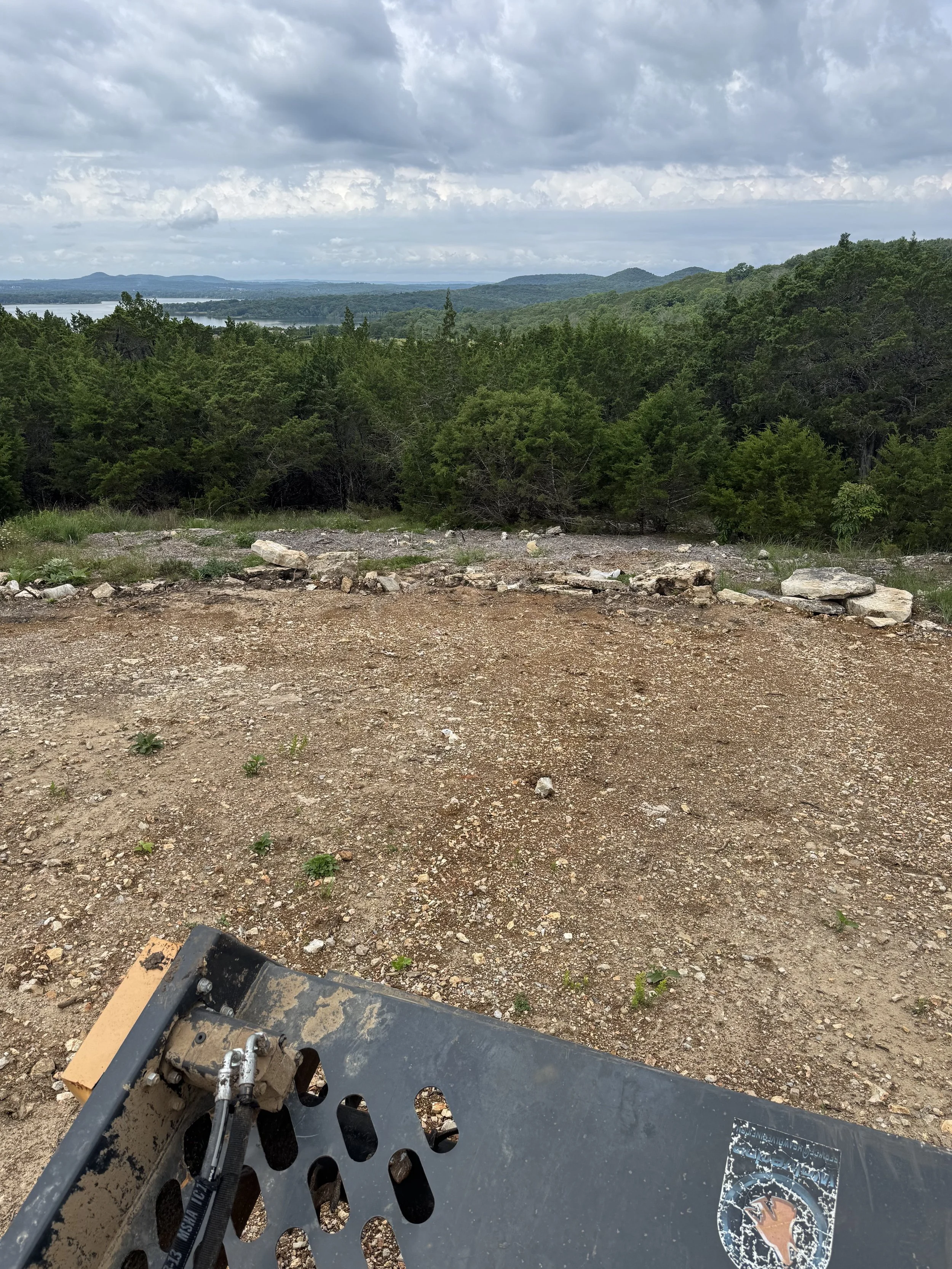
From Rocky Ground to a Healthy Lawn: Rock Raking, Grading and Topsoil Installation in Shell Knob, Missouri
Why proper soil preparation is essential for landscaping in the rocky Table Rock Lake region
The beautiful hillsides surrounding Table Rock Lake are one of the reasons people choose to build homes and own property in Shell Knob, Missouri. However, beneath those scenic views lies one of the biggest challenges property owners face when establishing a lawn: rocky terrain with very little natural topsoil.
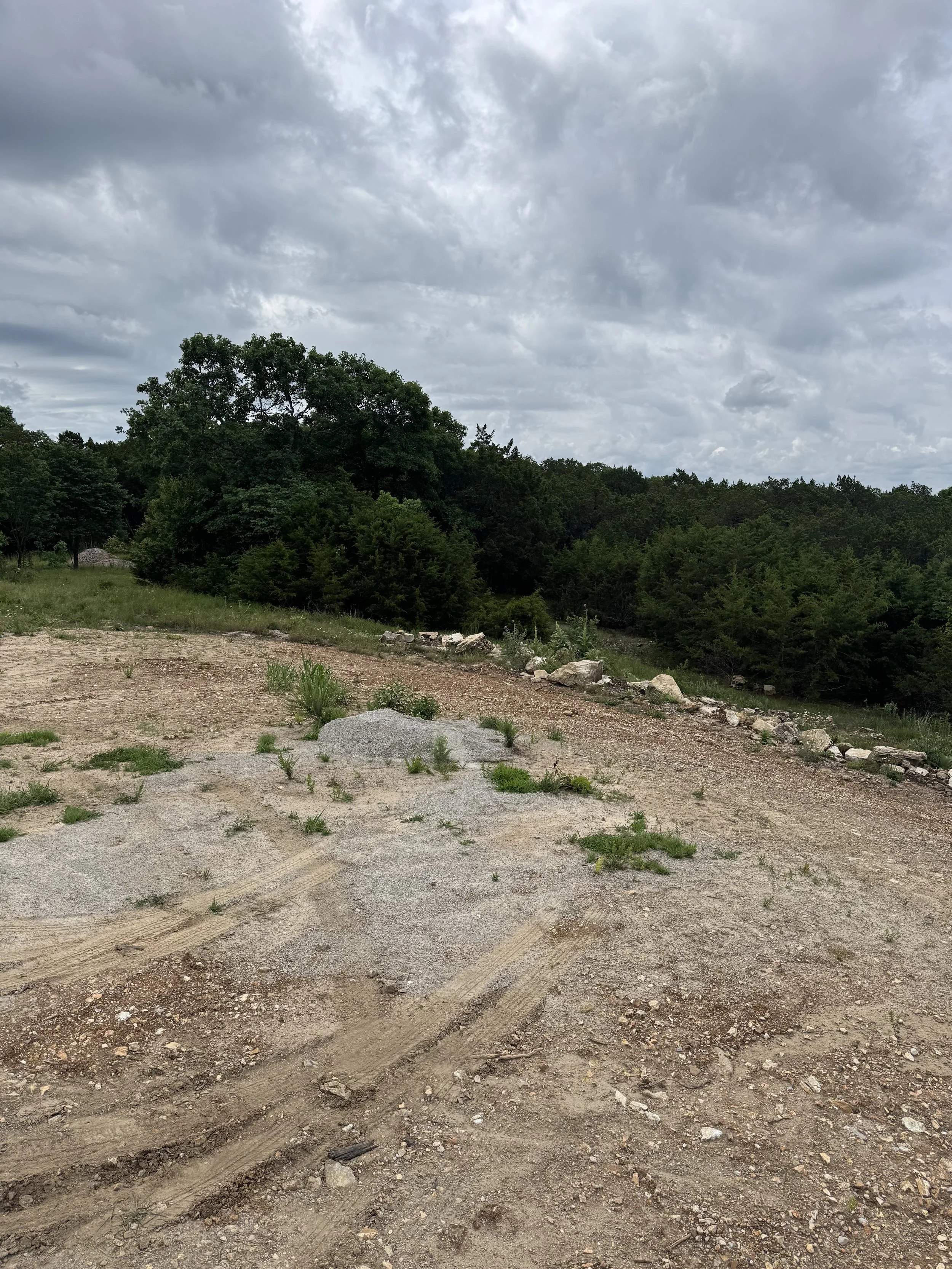
Throughout the Shell Knob and Table Rock Lake area, many properties have only a thin layer of soil covering limestone, chert, and other rocky material. In some locations, exposed rock and compacted subsoil make it nearly impossible to establish a healthy lawn without additional preparation.
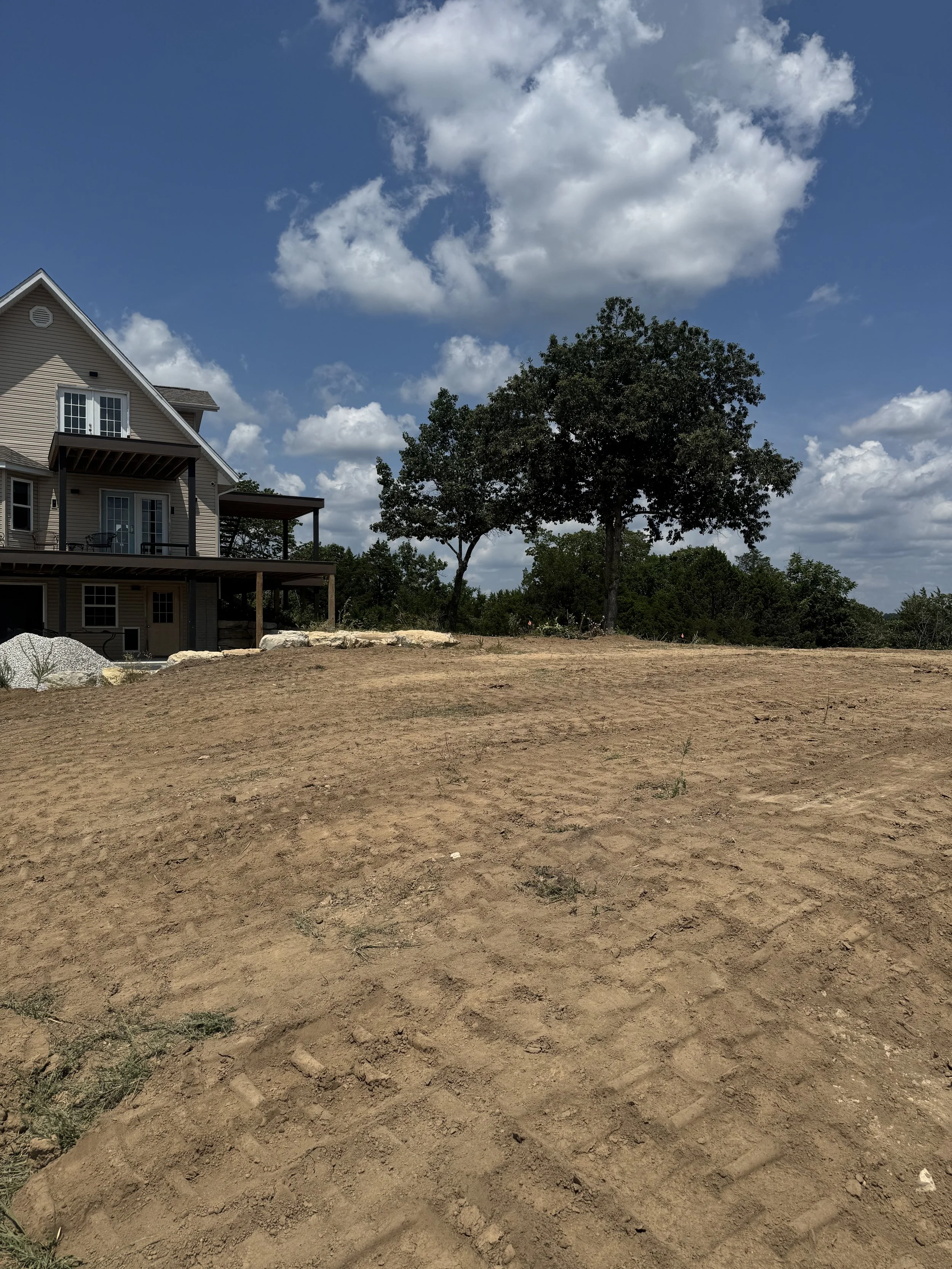
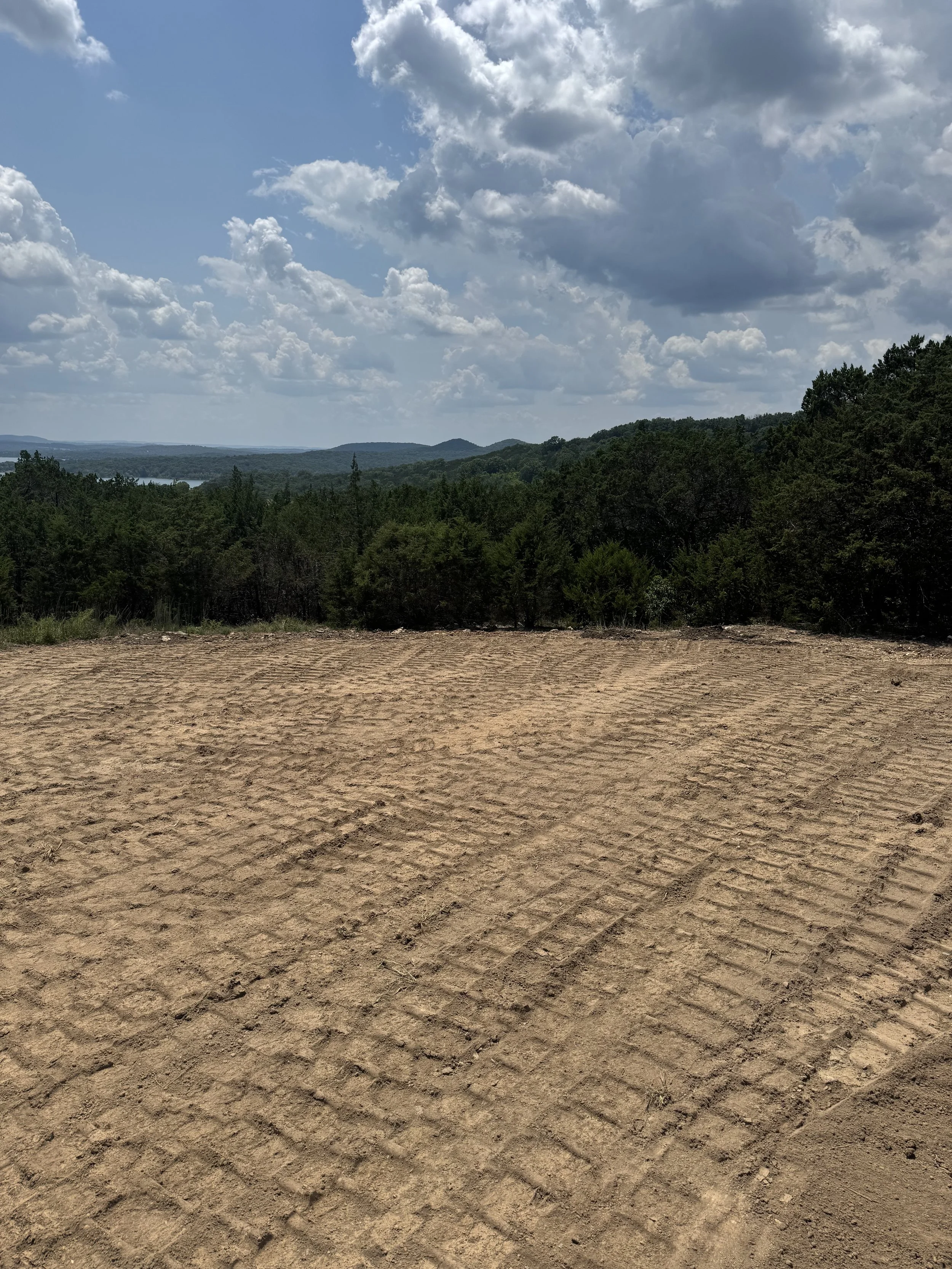
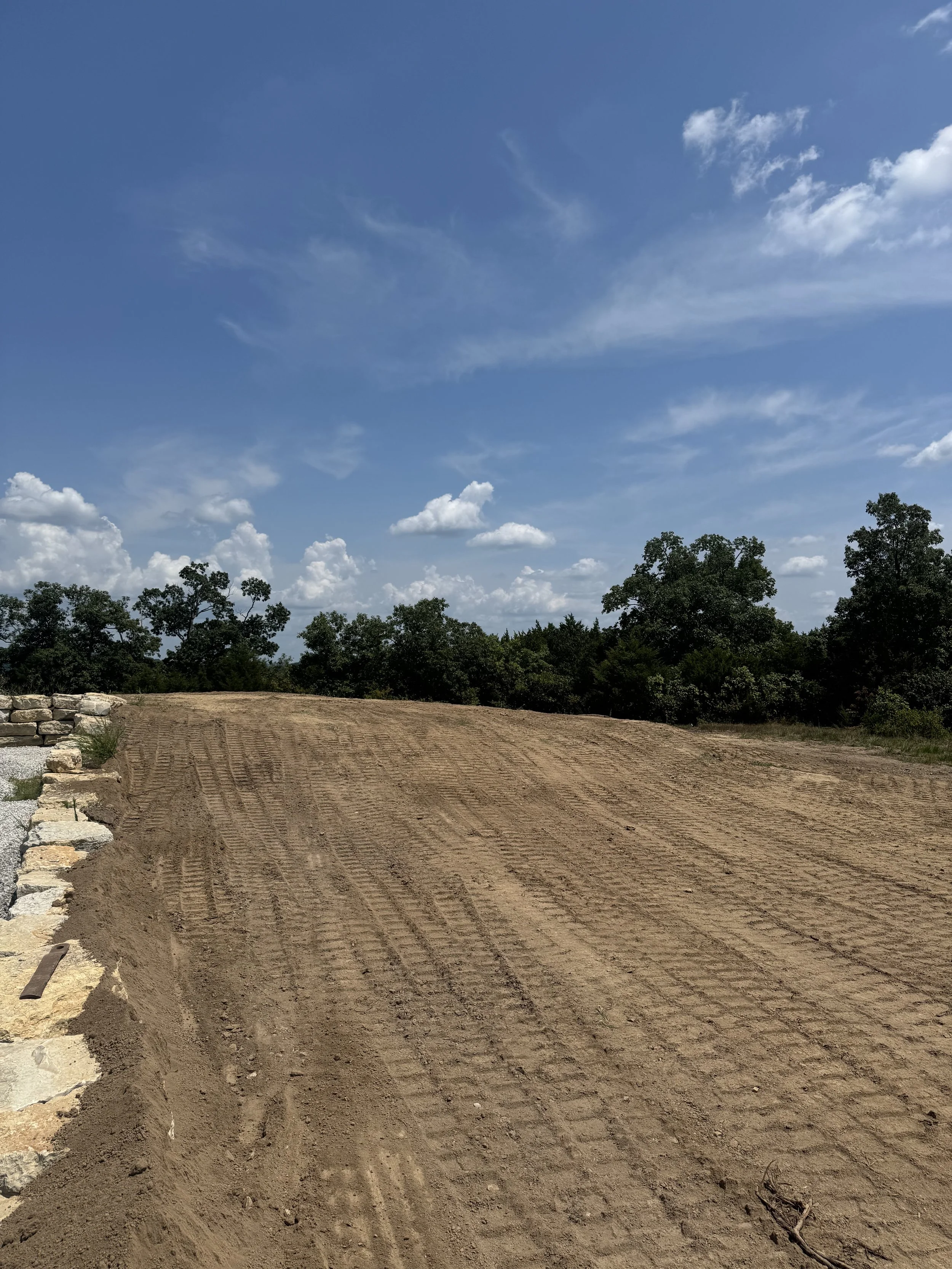
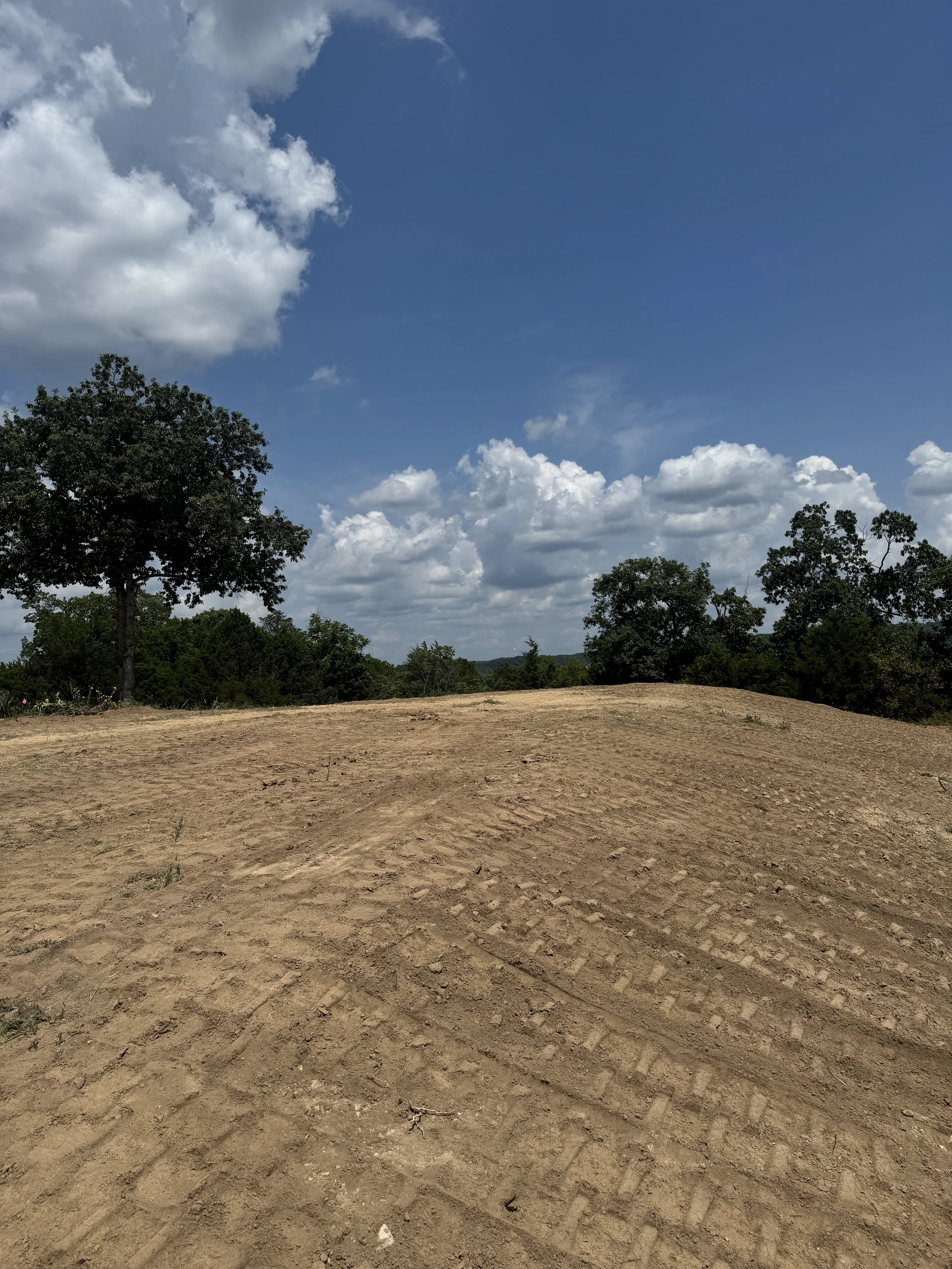
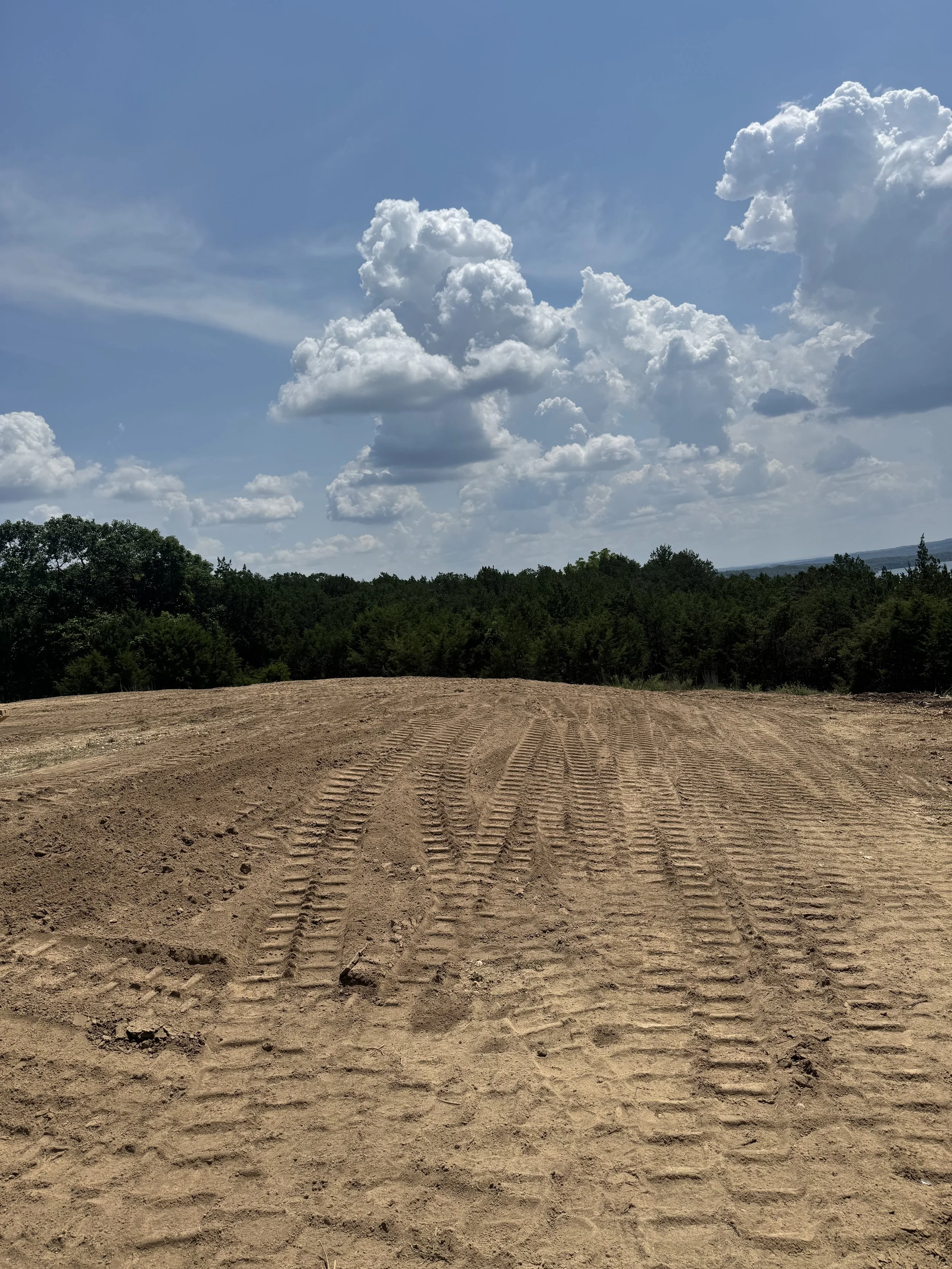
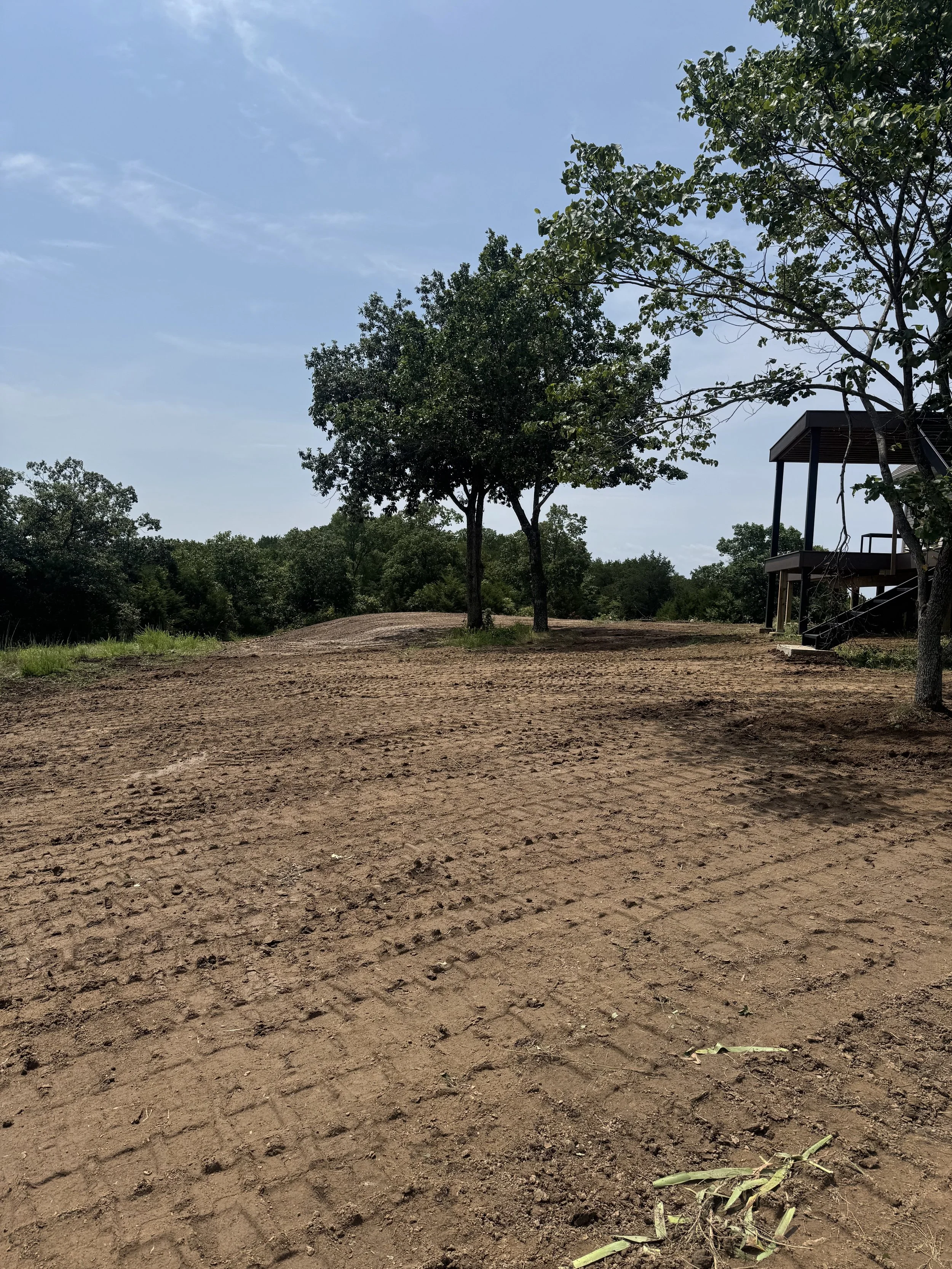
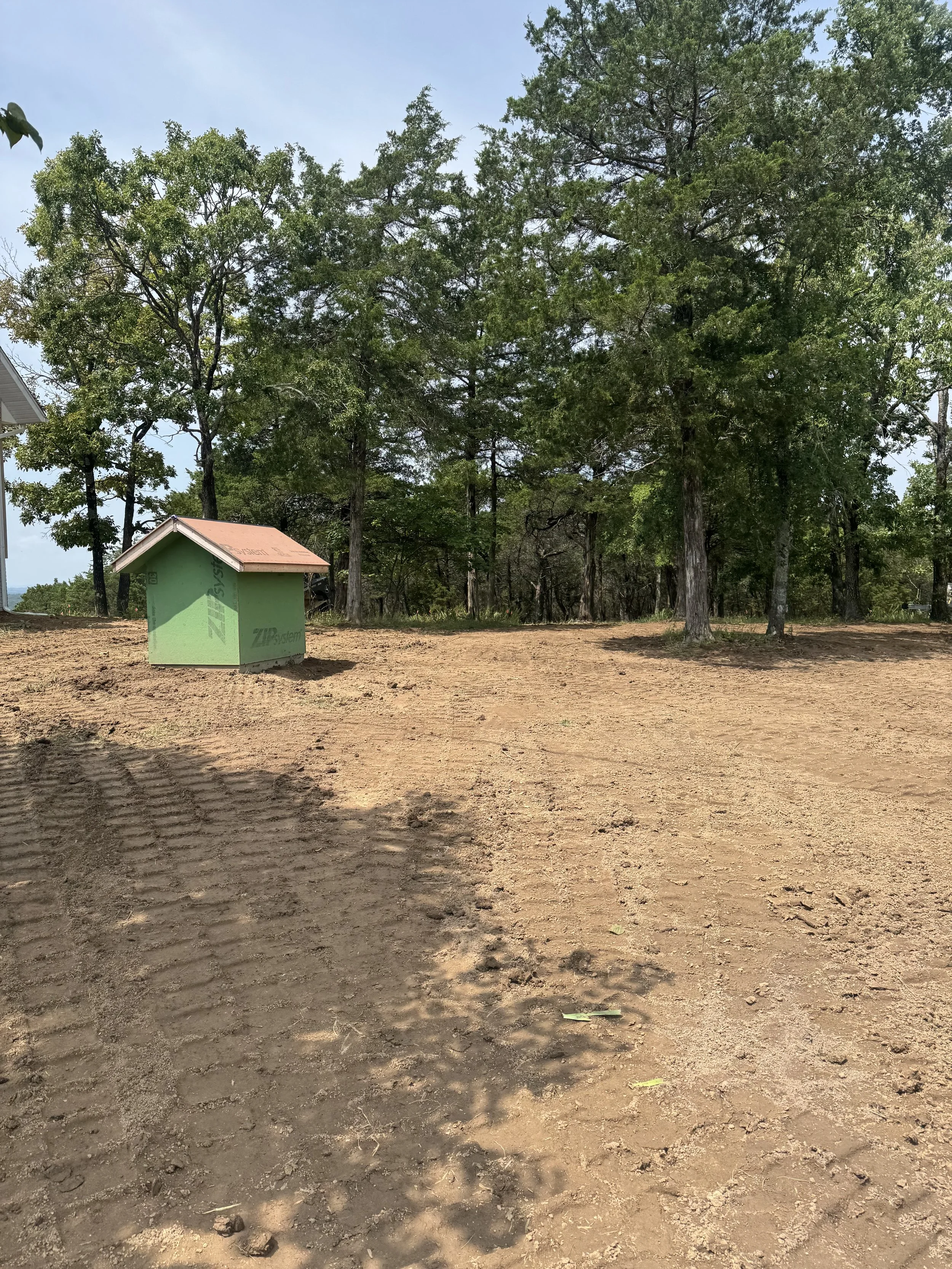
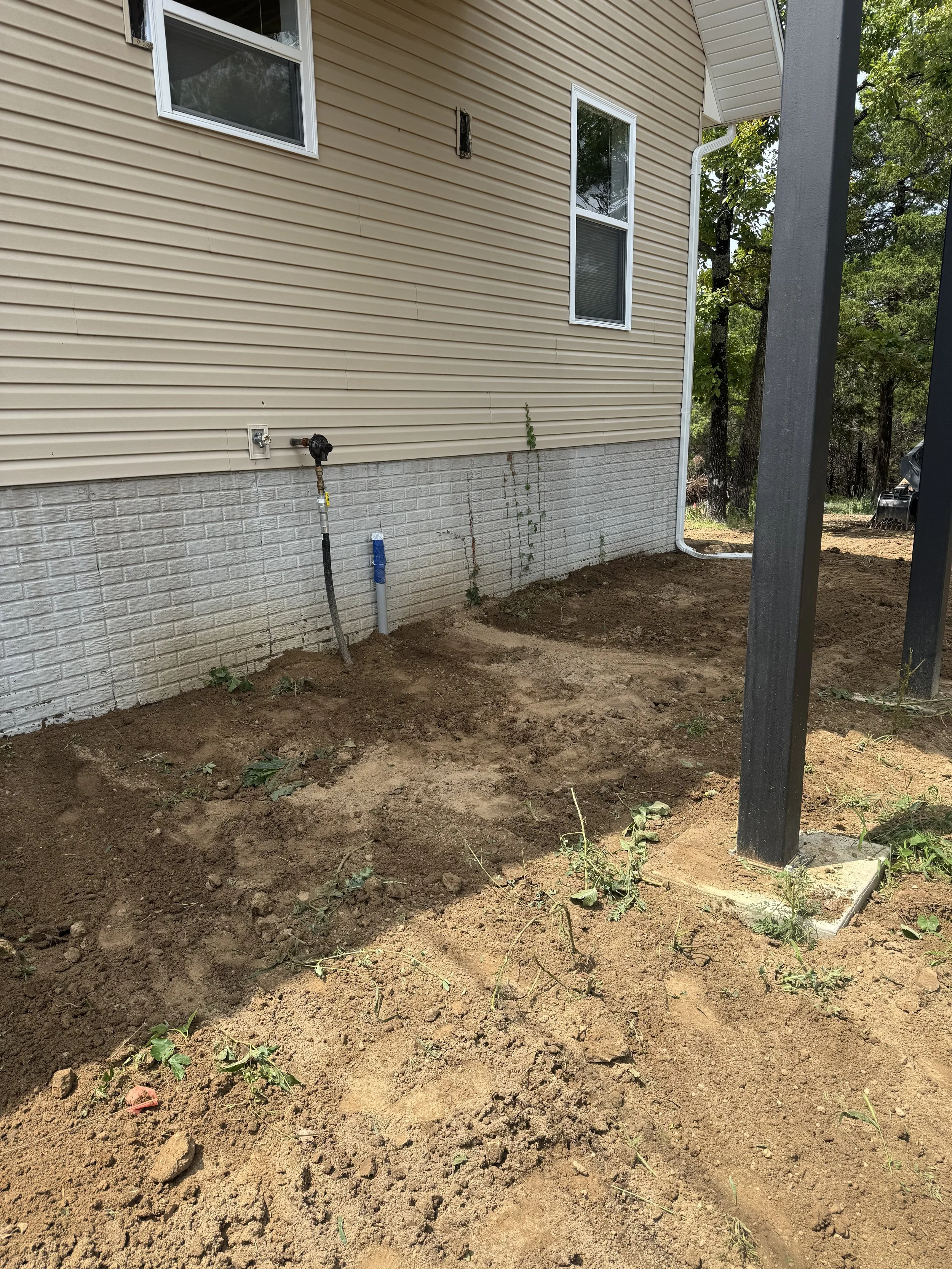
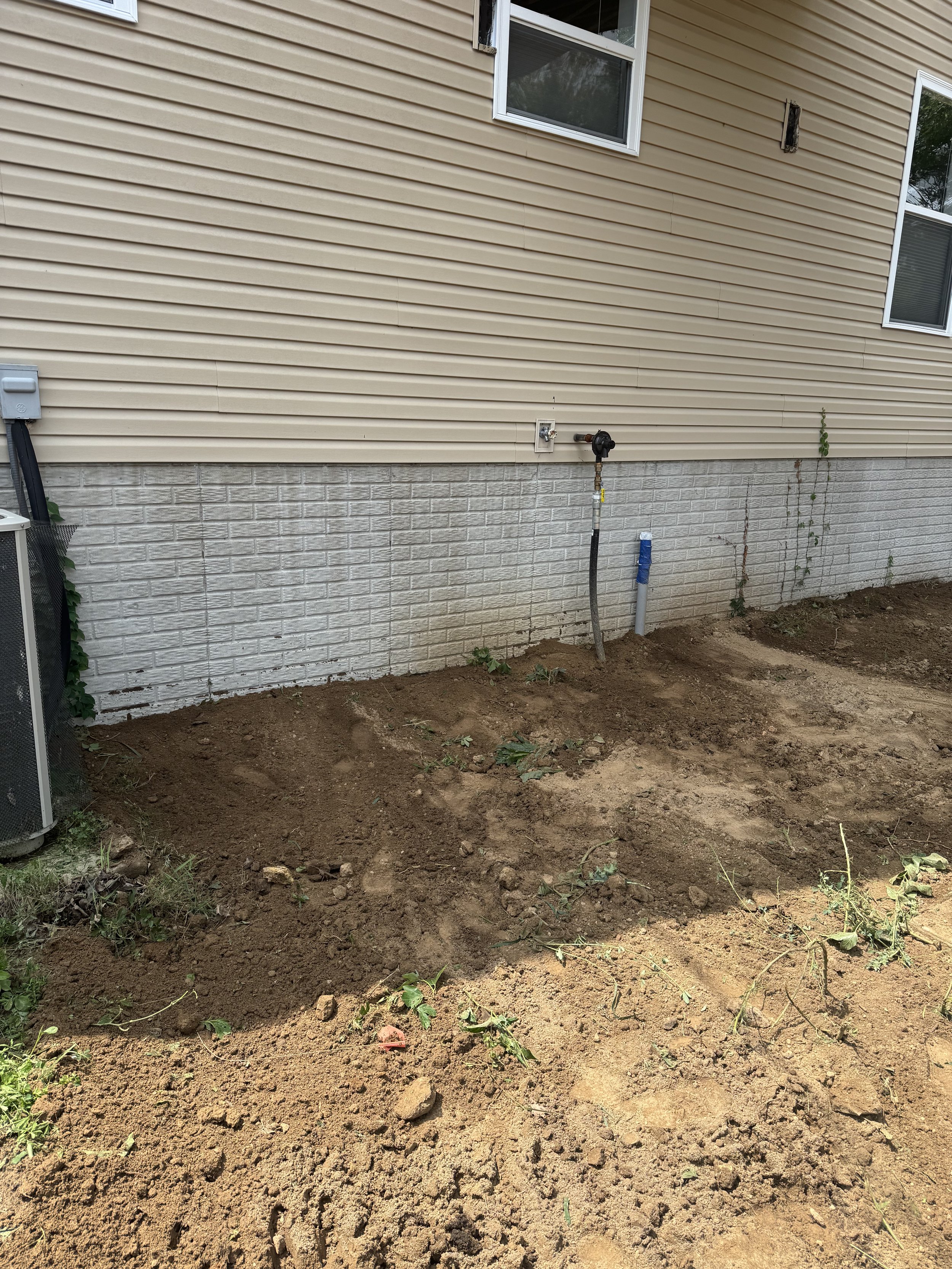
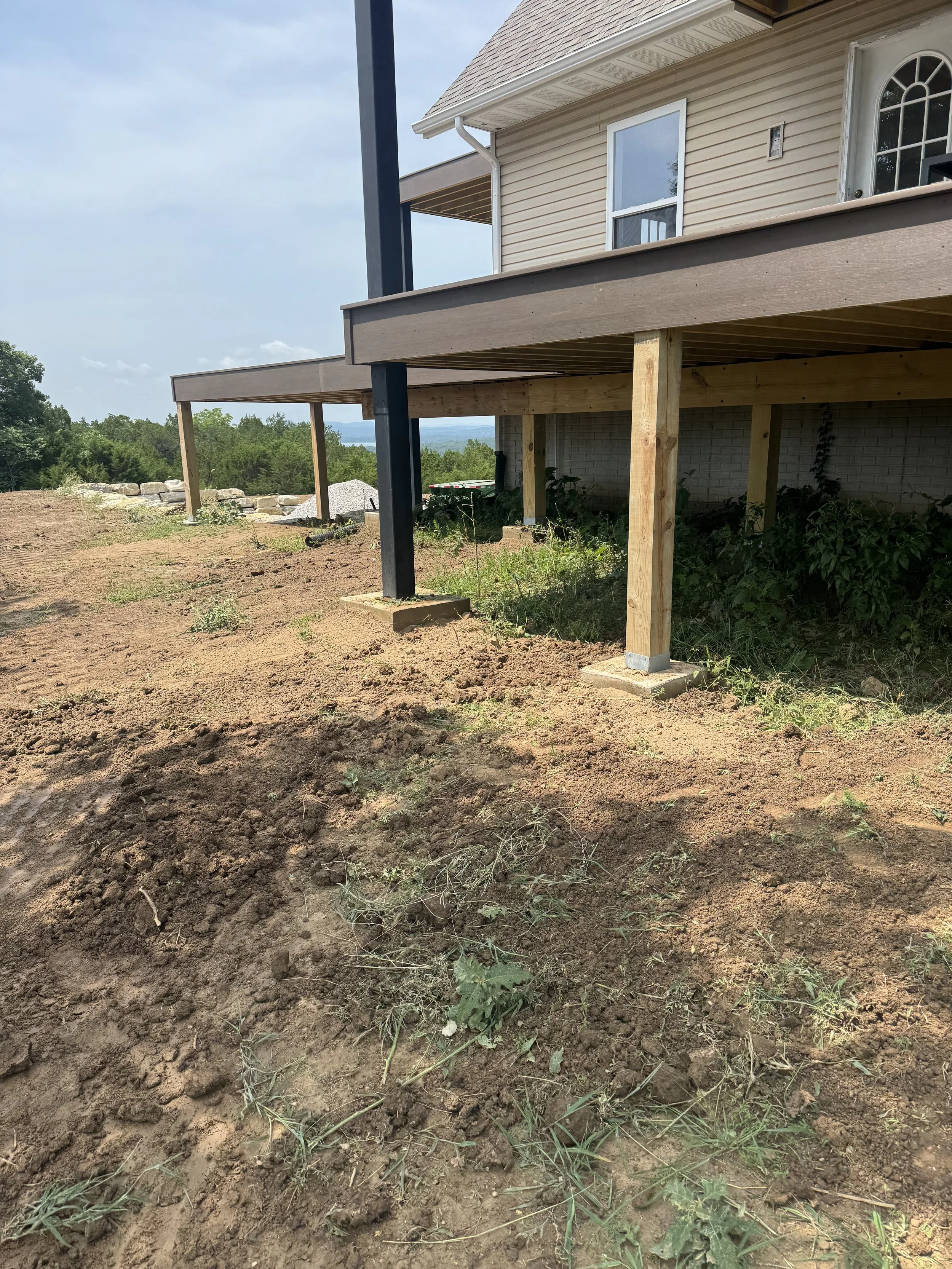
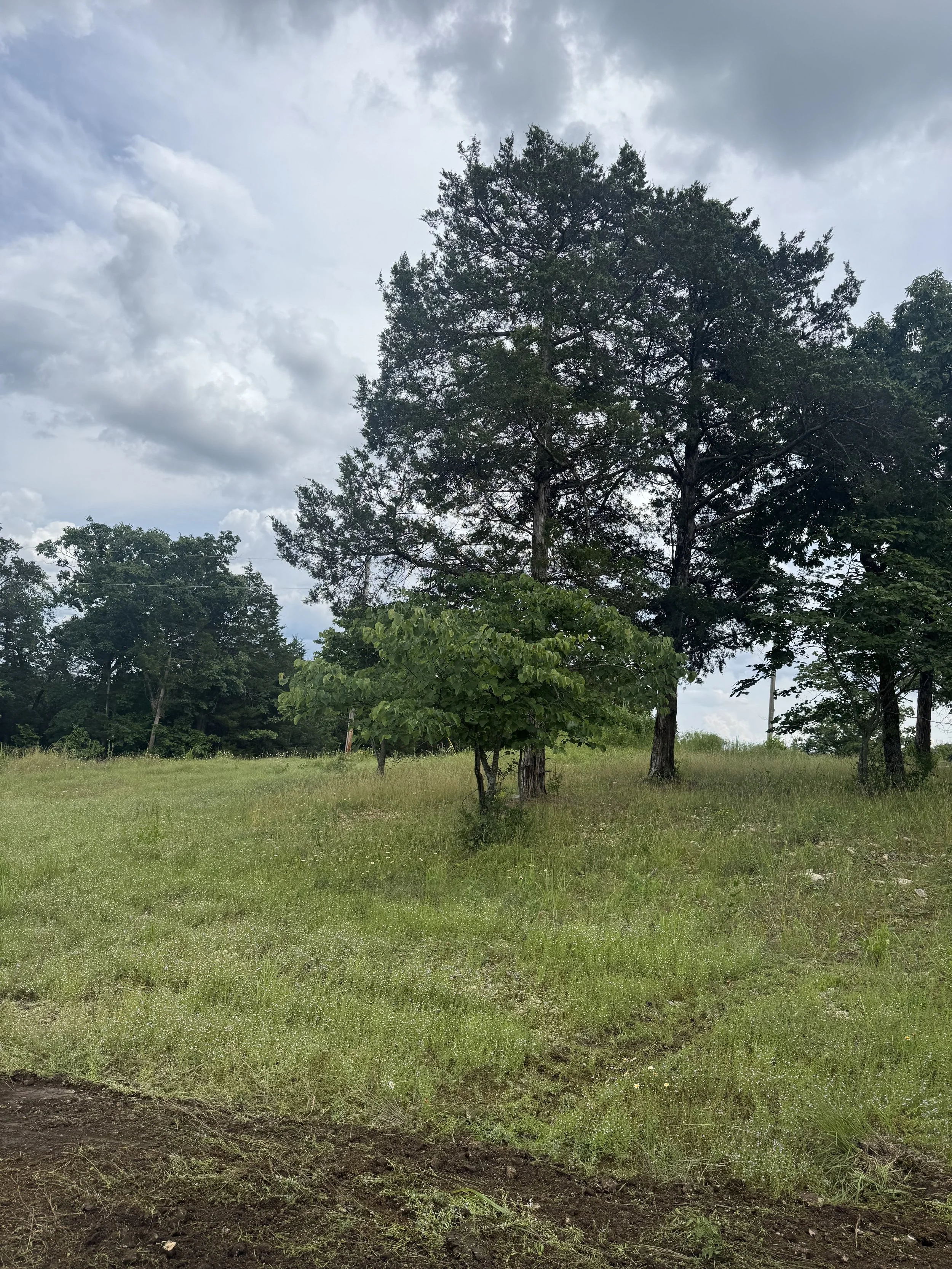
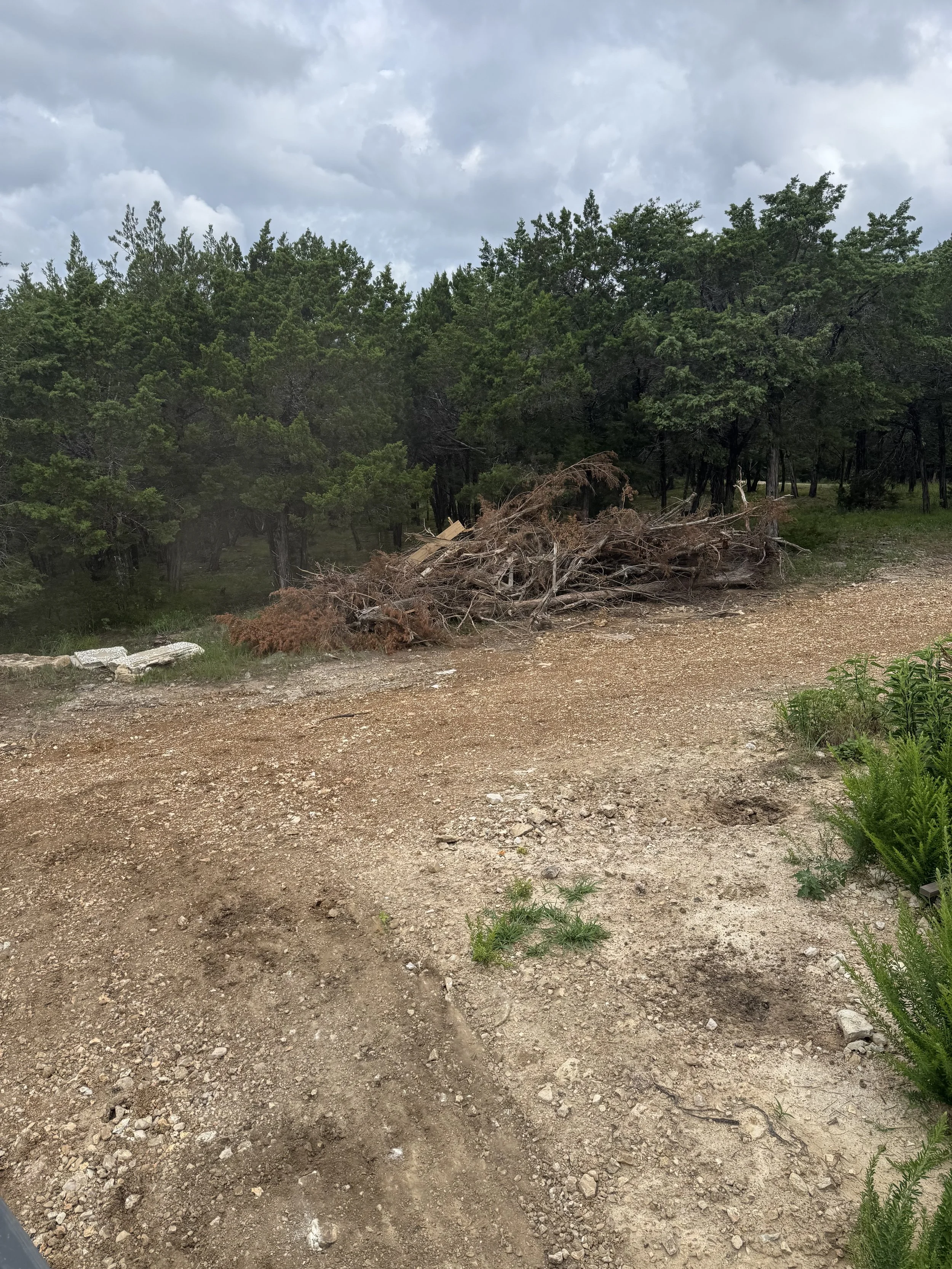
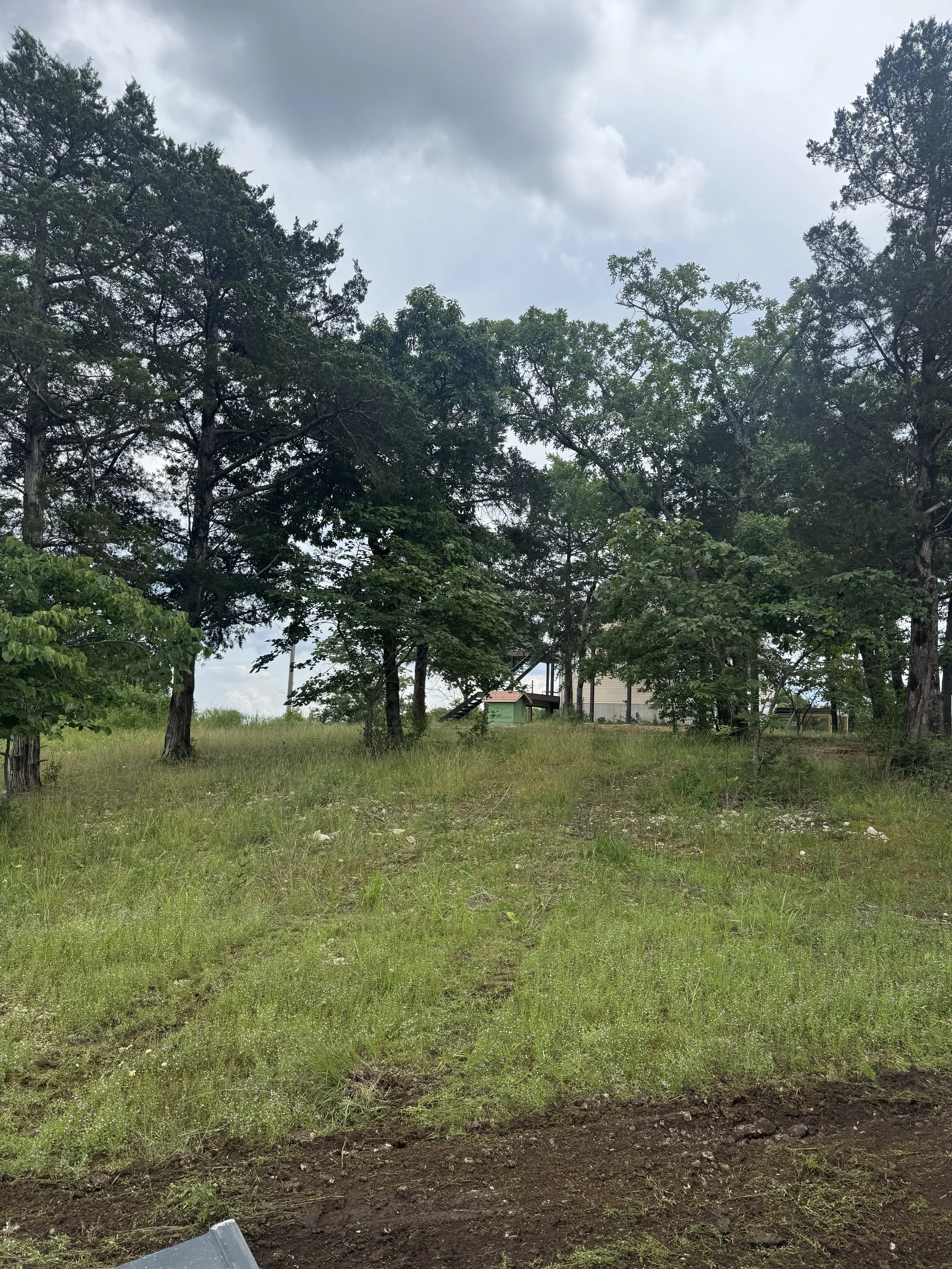
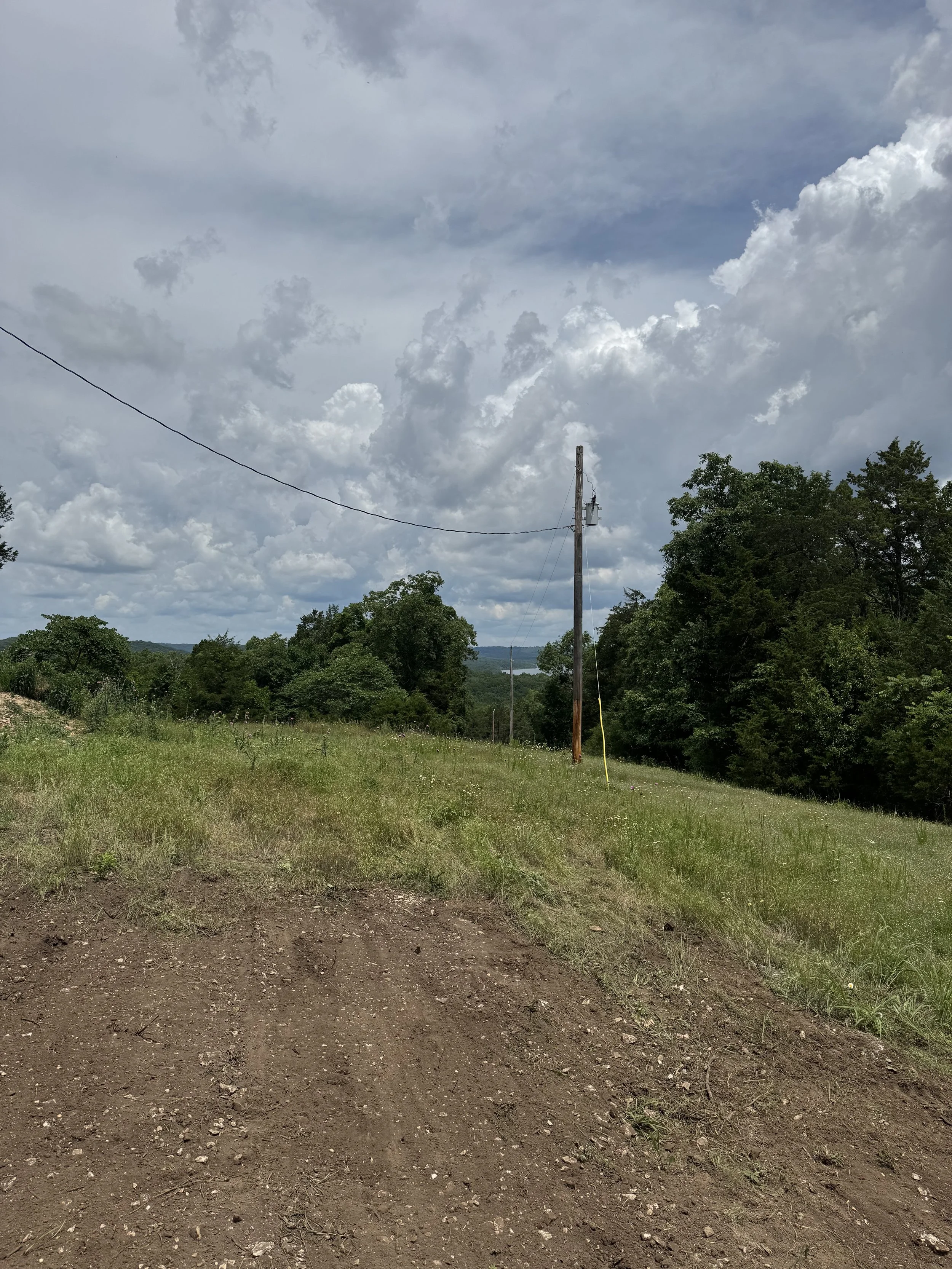
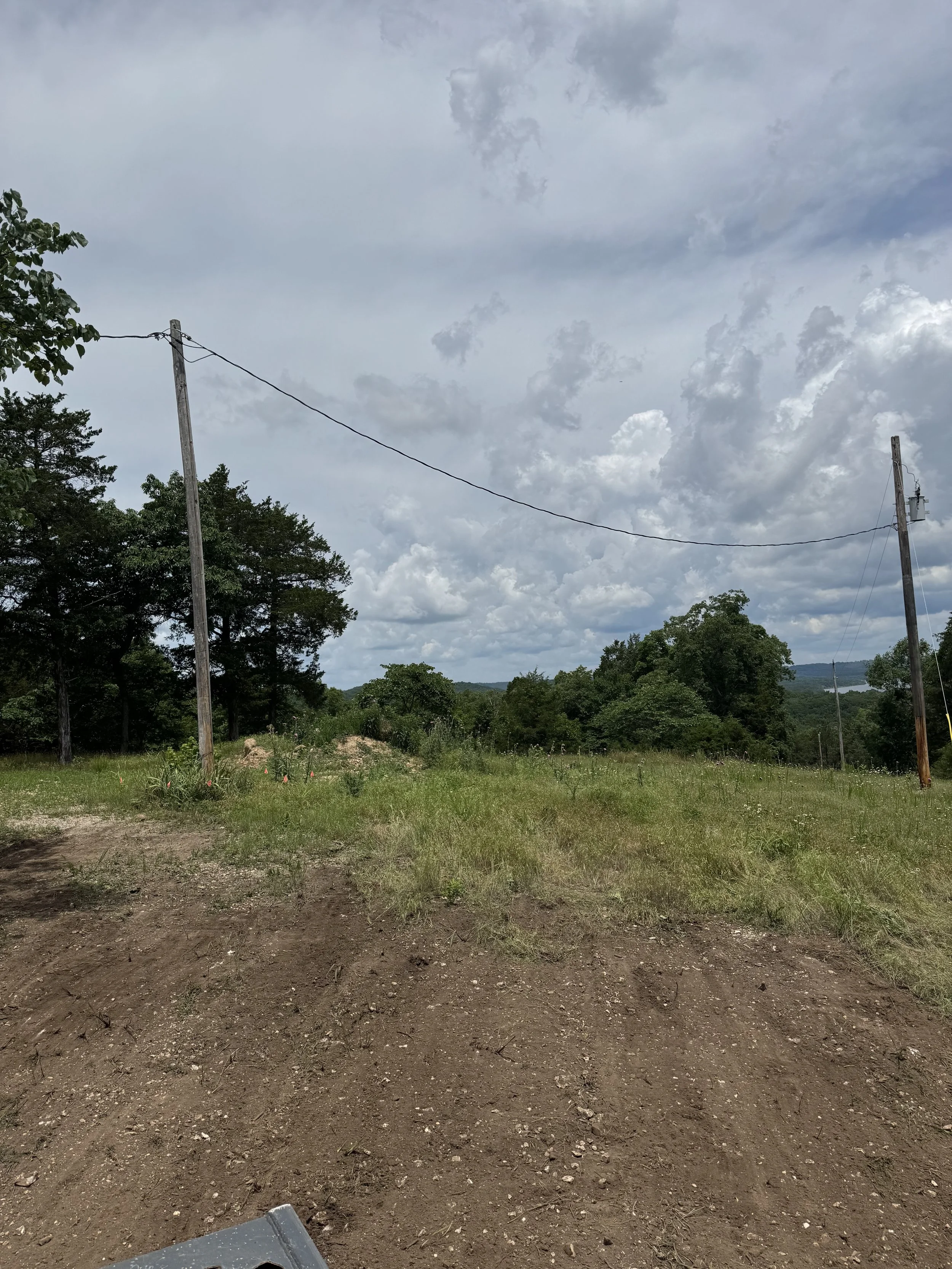
At T and D Land Management, we recently completed a land improvement project in Shell Knob that involved rock raking, grading and leveling, importing topsoil, and hydroseeding.
This project highlights why successful lawn establishment in the Ozarks begins long before grass seed ever touches the ground.
Why Is There So Little Topsoil Around Table Rock Lake?
The Ozarks are known for their rugged hills, rocky slopes, and shallow soils. Much of the Table Rock Lake region sits on weathered bedrock, with limestone and chert commonly found throughout the landscape.
Over thousands of years, weathering and erosion have shaped the terrain. On steeper slopes, rainfall and runoff can carry away fine soil particles, leaving behind rock fragments and relatively shallow soil.
As a result, properties throughout Shell Knob, Eagle Rock, Golden, and the surrounding lake communities often have limited amounts of naturally occurring topsoil.
This creates several problems for property owners attempting to establish grass:
Limited root development: Grass roots struggle to establish in shallow, rocky soil.
Poor moisture retention: Thin soil layers can dry out quickly during hot Missouri summers.
Uneven growth: Areas with slightly deeper soil may grow grass while exposed rocky sections remain bare.
Increased erosion: Rainfall can wash loose soil and seed downhill before vegetation becomes established.
Difficulty maintaining lawns: Surface rocks can damage mowing equipment and make routine maintenance difficult.
For many properties in the Shell Knob area, simply grading the existing material and spreading grass seed is not enough.
Importing quality topsoil is often a necessary part of creating a suitable growing environment.
Step 1: Why Rock Raking Comes Before Topsoil Installation
One of the most common mistakes when preparing rocky property for grass is placing topsoil directly over an uneven surface filled with loose rocks and debris.
While adding soil may temporarily hide those conditions, the underlying problems can eventually affect the finished lawn.
Before bringing in topsoil at our Shell Knob project, we performed rock raking to remove unwanted surface material and improve the condition of the existing ground.
Rock raking uses specialized equipment to separate and collect loose rocks, roots, and other debris while preparing the surface for further grading.
Why is rock raking important?
1. Creates a more uniform base
Removing larger surface rocks allows the ground to be graded more consistently before additional soil is placed.
2. Reduces future lawn maintenance problems
Rocks left near the surface can become exposed through erosion, soil settlement, or routine lawn use, creating obstacles for mowing equipment.
3. Improves topsoil placement
A properly prepared base makes it easier to distribute imported topsoil at a more consistent depth.
4. Reduces unnecessary material waste
When significant surface irregularities are corrected before topsoil installation, less imported material may be needed to achieve the desired finish.
In rocky areas like Shell Knob, rock raking is often an important first step in preparing disturbed ground for landscaping.
Step 2: Grading and Leveling Without Ignoring Natural Drainage
Once the larger surface rocks and debris were addressed, the next step involved grading and leveling the property.
Many homeowners assume grading means making the entire property perfectly flat. In reality, proper grading is about creating a smooth, usable surface while maintaining appropriate drainage.
This is especially important around Table Rock Lake, where properties frequently have significant elevation changes.
Water naturally follows the slope of the land. If grading is performed incorrectly, stormwater can collect near structures, create washouts, or carry newly installed topsoil downhill.
What does proper grading accomplish?
Smooths uneven ground and removes unwanted high and low spots
Creates more usable lawn and outdoor areas
Establishes appropriate surface slopes for drainage
Prepares the ground for consistent topsoil placement
Reduces areas where water may collect or concentrate
On sloped Ozarks properties, grading must account for the existing terrain rather than simply pushing material until the ground appears level.
A properly graded surface is the foundation for successful topsoil installation and lawn establishment.
Step 3: Why Bringing In Topsoil Is Often Necessary in Shell Knob
One of the most important phases of this project was bringing in topsoil.
Unlike properties with deep, naturally fertile soil, many locations around Table Rock Lake contain very little usable topsoil. Even after rocks have been removed and the ground has been graded, the remaining material may consist largely of rocky subsoil.
Grass needs more than a level surface to grow. It requires sufficient soil depth, moisture, oxygen, and available nutrients to develop a healthy root system.
Without those conditions, newly seeded grass may germinate initially but struggle to survive periods of heat or drought.
What happens when grass is planted directly into rocky subsoil?
Shallow root systems
When soil depth is limited, roots have less room to expand. This can leave grass more vulnerable to drought and temperature extremes.
Rapid drying
Rocky, shallow soils often have limited capacity to store water. During the summer, these areas can dry out much faster than lawns with deeper soil.
Poor nutrient availability
Exposed subsoil may contain less organic matter and fewer plant-available nutrients than quality topsoil.
Patchy grass establishment
Grass may grow in pockets where soil has accumulated while struggling in areas dominated by rock.
How much topsoil should be added?
For many new lawns, approximately 4–6 inches of suitable soil provides a useful target for grass establishment, although the ideal depth depends on the existing soil, intended turf, and site conditions.
On particularly rocky properties, additional soil preparation or greater depth may be beneficial.
It is also important to remember that topsoil should not simply be dumped over loose debris or an unstable surface. Proper grading and preparation help create a more consistent foundation.
At our Shell Knob project, imported topsoil provided a more suitable planting layer over the prepared rocky ground.
In the Table Rock Lake region, bringing in topsoil is frequently not just an upgrade. It is a practical necessity for establishing a healthy, sustainable lawn.
Step 4: Hydroseeding After Proper Ground Preparation
With rock raking, grading, leveling, and topsoil installation completed, the property was ready for hydroseeding.
Hydroseeding is a method of applying grass seed using a mixture of water, mulch, seed, and other materials selected for the project.
The mixture is sprayed over the prepared ground, helping distribute seed across the surface.
Hydroseeding is commonly used on newly constructed homesites, large lawn areas, graded slopes, and disturbed ground.
Why use hydroseeding on Ozarks properties?
More consistent seed coverage
Hydroseeding can distribute grass seed across irregular areas and slopes more efficiently than some traditional seeding methods.
Moisture retention
The mulch component helps retain moisture around the seed during germination.
Support for erosion control
Hydroseeding mulch can provide some temporary surface protection, although steep slopes or areas with concentrated runoff may require additional erosion-control measures.
Efficient application
For larger properties, hydroseeding can be a practical alternative to installing sod.
However, hydroseeding is not a substitute for proper ground preparation.
Applying seed over exposed rock, compacted subsoil, or an improperly graded surface will not correct the underlying conditions.
The success of hydroseeding depends heavily on the work completed beforehand.
What happens after hydroseeding?
Newly hydroseeded areas require consistent moisture during germination. Watering schedules should be adjusted for rainfall, temperatures, soil conditions, and the type of grass planted.
Property owners should also avoid unnecessary traffic on newly seeded areas and monitor slopes for signs of runoff or erosion.
Establishing a healthy lawn takes time, and results depend on weather, maintenance, and growing conditions.
Why the Order of Land Preparation Matters
For this Shell Knob project, the process followed a logical sequence:
Rock Raking → Grading and Leveling → Imported Topsoil → Hydroseeding
Each phase served a specific purpose.
Rock raking addressed the loose surface material. Grading created a more consistent surface. Imported topsoil provided the growing medium that the rocky native ground lacked. Hydroseeding then introduced grass seed to the prepared areas.
Skipping one of these steps can create problems later.
For example, adding topsoil without properly grading the underlying ground may result in uneven depths or drainage issues. Hydroseeding directly over rocky subsoil may produce inconsistent growth and poor drought tolerance.
Completing the work in the proper order helps protect the investment in soil, seed, and site preparation.
Planning a Lawn or Property Improvement Project Near Table Rock Lake?
Whether you’re building a new home, improving an existing lake property, or restoring ground disturbed during construction, understanding your property’s soil conditions is essential.
Not every property requires the same amount of rock removal, grading, or imported topsoil. Soil depth, drainage, slope, and the intended use of the property should all be evaluated before work begins.
For homeowners in Shell Knob and surrounding communities, rocky terrain is simply part of living in the Ozarks. With the right equipment and preparation, however, those challenging conditions can be transformed into more functional and attractive outdoor spaces.
Professional Rock Raking, Grading and Site Preparation in Southwest Missouri
T and D Land Management provides professional land improvement services throughout Shell Knob, Barry County, Stone County, and surrounding Southwest Missouri communities.
Our services include rock raking, grading and leveling, excavation, site preparation, land clearing, forestry mulching, drainage solutions, driveway installation, and property reclamation.
We understand the challenges of working with rocky Ozarks terrain and the importance of preparing land correctly before the next phase of construction or landscaping.
Ready to Improve Your Property?
If your property has exposed rock, uneven ground, poor soil, or areas where grass struggles to grow, proper land preparation can make all the difference.
Contact T and D Land Management to discuss rock raking, grading, leveling, and site preparation for your Shell Knob or Table Rock Lake property.
Fully Insured – Locally Trusted | Serving Southwest Missouri